1. INTRODUCTION
The Chartered Institute of Directors (CIoD) Nigeria, through its Power and Energy Sectoral Group (PESG), convened an advocacy webinar themed Balancing the Energy Mix: Governance, Financing, and Sustainability in Nigeria’s Power Sector.
The webinar brought together industry leaders, policymakers, directors, and key stakeholders to examine Nigeria’s persistent electricity supply deficit. Participants noted that national grid generation currently averages approximately 5,400MW, significantly below the estimated 30,000MW required to support a population of over 230 million people and drive sustainable economic growth.
2. OPENING MANDATE
In his opening remarks, the President and Chairman of the Governing Council, Otunba Adetunji Oyebanji, F.CIoD, underscored that Nigeria’s energy crisis is fundamentally an institutional and governance challenge, rather than a lack of resources.
He emphasised that achieving energy adequacy requires leadership that prioritises long-term resilience, policy discipline, and environmental responsibility over short-term interventions. He reaffirmed the Institute’s commitment to strengthening boardroom leadership and influencing public policy to enable sustainable transformation of the power sector.
3. KEYNOTE ADDRESS: THE GOVERNANCE IMPERATIVE
The keynote address was delivered by Emeritus Professor Wumi Iledare, who presented a compelling technical and economic framework for reforming Nigeria’s power sector. Key highlights included:
• Institutional Reform:
The current power sector mirrors the structural weaknesses that once characterised the oil and gas sector before the Petroleum Industry Act (PIA). There is an urgent need to clearly separate policy formulation, regulation, and commercial operations to improve efficiency and accountability.
• Portfolio Logic for Energy Planning:
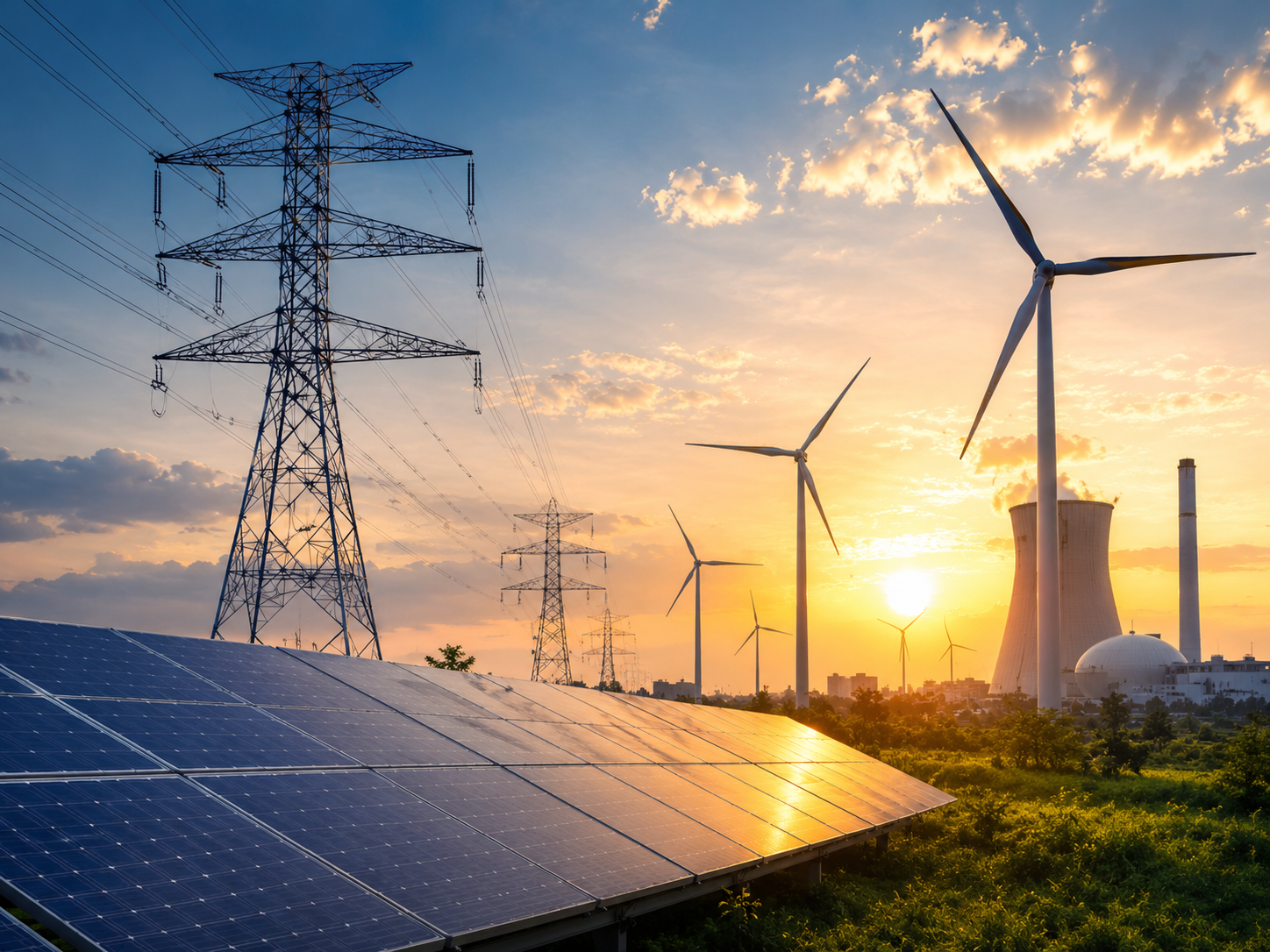
Nigeria must abandon silo-based energy planning in favour of a portfolio approach. Natural gas should serve as a transition fuel to provide baseload stability, while renewable energy solutions support decentralised and rural electrification.
• Financial Realism and Bankability:
Sustainable capital inflows depend on bankable projects with predictable cash flows. Structural issues such as non-cost-reflective tariffs, weak revenue collection, and poor risk allocation must be addressed to attract long-term investment.
• The Four A’s of Sustainability:
A balanced energy mix must simultaneously deliver Accessibility, Affordability, Adaptability, and Availability to meet Nigeria’s development needs.
4. PANEL DISCUSSIONS AND OBSERVATIONS
Panel discussions reinforced the keynote insights and identified key barriers to sector progress:
• Governance Gaps: Weak regulatory enforcement, policy inconsistency, and political interference continue to undermine sector performance and investor confidence.
• Energy Mix Strategy: Energy sources should be optimally deployed based on reform-driven priorities. Solar and hybrid solutions were identified as critical to improving reliability and expanding access.
• Infrastructure Deficit: Significant investment in gas infrastructure and grid flexibility is required to support baseload generation and enable effective integration of intermittent renewable energy sources.
5. POLICY RECOMMENDATIONS AND CALL TO ACTION
To strengthen governance and sustainability in Nigeria’s power sector, the following priorities were advanced:
A. Government and Policymakers
• Establish a PIA-style governance framework that clearly separates policy formulation, regulation, and commercial operations in the power sector.
• Design energy policies and institutions that endure beyond political cycles, ensuring long-term certainty and investor confidence.
• Ensure government acts strictly as a policy setter and referee, not a market competitor.
B. Regulators
• Safeguard regulatory independence and enforce rules without political interference.
• Drive the transition to cost-reflective tariffs, supported by transparent and targeted subsidies where necessary.
• Enforce the sanctity of contracts, particularly gas supply and transportation agreements.
• Mandate comprehensive metering and energy measurement to strengthen market discipline.
C. Sector Operators and Investors
• Adopt a portfolio-based energy mix, combining gas for baseload and industrial clusters with renewables for decentralised and rural electrification.
• Invest in grid flexibility and enabling infrastructure to integrate intermittent renewable energy.
• Improve operational efficiency, billing integrity, and revenue collection across the value chain.
D. Boards and Corporate Leadership
• Insist on governance clarity, transparency, and financial realism in sector decision-making.
• Ensure energy solutions are fit-for-purpose, aligned with local demand, scale, and economic viability.
• Provide effective oversight to strengthen risk management and long-term sustainability.
E. CIoD Nigeria (Advocacy and Thought Leadership)
• Sustain evidence-based advocacy with government and regulators on sector reform.
• Build boardroom capacity to support disciplined governance and responsible investment in the power sector.
6. CONCLUSION
The webinar concluded with a firm commitment from the Chairman of CIoD PESG, Dr. Felix Amieyeofori, M.CIoD, and the Director-General, Dr. Taiwo Nolas-Alausa, MITD, M.CIoD, that the insights and resolutions from the session will guide the Institute’s ongoing advocacy with government, regulators, and sector stakeholders.
The CIoD Nigeria PESG reaffirmed that Nigeria’s energy future depends on strong governance, financial discipline, policy coherence, and pragmatic energy choices anchored in long-term national interest.