
- PREAMBLE
The Chartered Institute of Directors Nigeria (CIoD Nigeria), through its Agriculture & Agro-Allied Sectoral Group, convened a high-level multi-stakeholder virtual engagement on Tuesday, 3 March 2026, under the theme:
“Governance Challenges in Agriculture and Agro-Allied Development in Nigeria” |
This engagement formed part of the Institute’s strategic advocacy and stakeholder engagement initiatives aimed at strengthening governance systems across critical sectors of the Nigerian economy.
Agriculture remains a fundamental pillar of Nigeria’s economy, contributing approximately 24–26% of Gross Domestic Product (GDP) and providing employment for a significant proportion of the national workforce. The sector plays a critical role in food security, poverty reduction, export diversification, industrial development, and inclusive economic growth.
Despite Nigeria’s considerable agricultural endowments—including over 14 million hectares of arable land, favourable climatic conditions, and a large domestic market—the sector continues to underperform relative to its potential. Participants noted that many of the prevailing constraints are rooted not in resource scarcity, but in governance, institutional, and policy challenges.
The dialogue therefore focused on identifying governance reforms and practical interventions capable of unlocking productivity, attracting investment, strengthening accountability, and promoting long-term sustainability across the agricultural value chain.
- PARTICIPATION
The session attracted Fellows, Members, and Associate Members of the Institute, alongside policymakers, regulators, agribusiness leaders, development finance institutions, academics, governance professionals, and other stakeholders.
Institute Leadership in Attendance
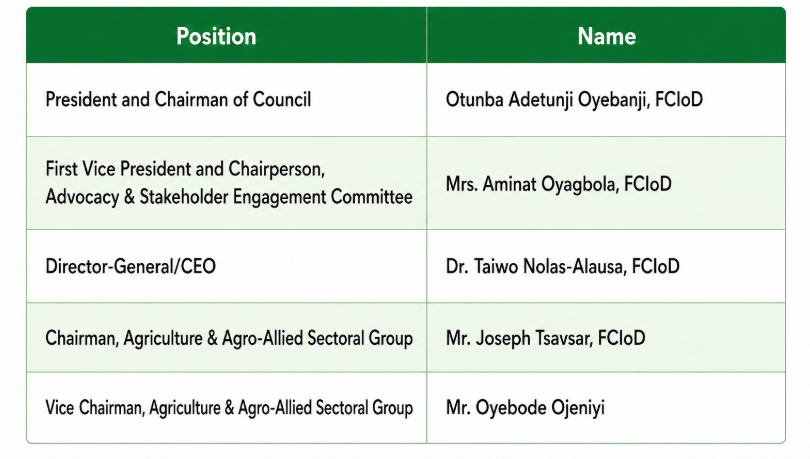
Members of the Governing Council were also present.
Distinguished Speakers
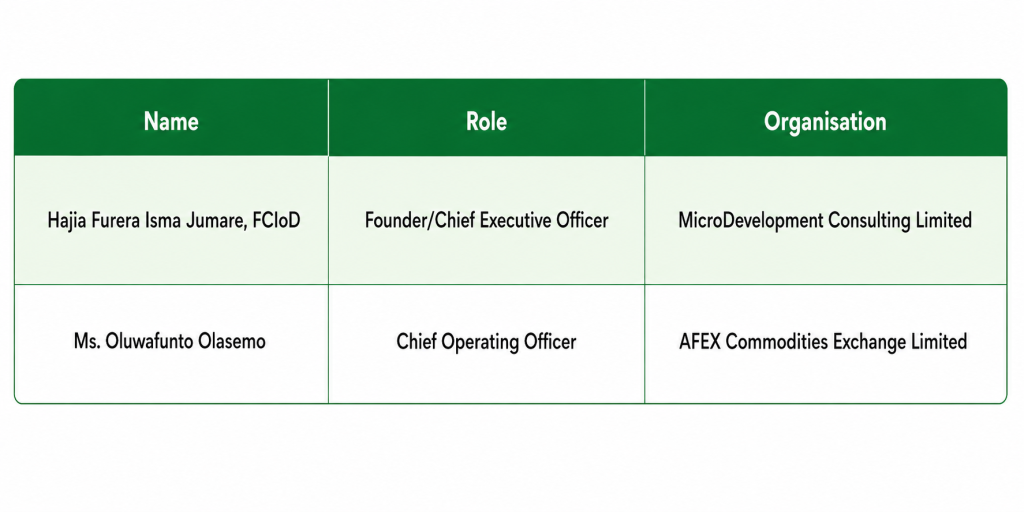
The session was moderated by Mr. Oyebode Ojeniyi, Vice Chairman of the Agriculture & Agro-Allied Sectoral Group.
- KEY GOVERNANCE INSIGHTS AND DELIBERATIONS
Following extensive deliberations, participants identified the following critical governance issues and reform priorities:
3.1 Governance Deficit and Institutional Coordination
Participants agreed that Nigeria’s agricultural underperformance is fundamentally a governance challenge rather than a limitation of land, labour, or climatic conditions.
Key concerns identified include:
- Policy inconsistency across political administrations
- Overlapping institutional mandates
- Weak monitoring and accountability systems
- Fragmented data architecture
- Limited inter-agency and cross-ministerial coordination
Recommendation: Participants advocated for a clearly defined institutional coordinating mechanism within the Federal Ministry of Agriculture and Food Security to align agricultural policies across key ministries and agencies. |
3.2 Policy Predictability, Legislative Reform and Political Will
The dialogue highlighted policy instability and regulatory uncertainty as major deterrents to long-term investment in the agricultural sector.
Participants called for:
- Legislative safeguards against policy reversals
- Harmonisation of fragmented agricultural laws and programmes
- Strengthened legal protection for long-term investments
- A Comprehensive Agricultural Governance Reform Bill
The meeting further emphasised that political will, policy continuity, and disciplined implementation remain essential ingredients for sustainable agricultural transformation.
3.3 Land Tenure and Structural Bottlenecks
Participants noted that despite the country’s vast arable land resources, significant barriers continue to hinder agricultural productivity.
Challenges identified include:
- Opaque land allocation processes
- Delays in issuance of Certificates of Occupancy
- Insecure tenure arrangements
- Limited collateralisation opportunities
Recommendation: The meeting recommended the implementation of digital, transparent, and time-bound land titling systems dedicated to agricultural and agro-industrial development. |
3.4 Capital Mobilisation, De-Risking and Central Bank Intervention Framework
The meeting observed that although Nigeria’s pension assets exceed ₦20 trillion, agriculture attracts only a minimal proportion of institutional investment due to perceived risks and weak financial structures.
Participants recommended:
- Strengthening commodities exchanges
- Expanding electronic warehouse receipt systems
- Developing structured crop insurance mechanisms
- Promoting blended finance models
- Establishing robust public-private risk-sharing facilities
Concerns were also raised regarding evolving Central Bank intervention frameworks, particularly around accessibility, sustainability, and inclusiveness.
3.5 Data Standardisation, Independent Validation and Performance-Based Allocation
Participants underscored the importance of reliable data as a foundation for policy formulation, investment decisions, and sector performance monitoring.
Recommendations included:
- National agricultural data standardisation
- Strengthened digital farmer registries
- Real-time production tracking systems
- Integrated monitoring and reporting frameworks
The meeting further advocated linking agricultural funding and allocations to independently verified performance indicators and measurable outcomes.
3.6 Infrastructure, Productivity and Market Access
The dialogue highlighted inadequate infrastructure as a major contributor to low productivity and post-harvest losses.
Priority areas identified include:
- Irrigation infrastructure
- Rural feeder roads
- Storage and aggregation facilities
- Cold-chain logistics
- Reliable power for agro-processing
Participants also stressed the need to improve market access for smallholder farmers through structured market systems, transparent pricing mechanisms, aggregation platforms, and export opportunities.
3.7 Security and Rural Stability
The meeting recognised rural insecurity as a significant threat to agricultural productivity and investment.
Participants agreed that restoring security across farming communities is essential for:
- Protecting agricultural investments
- Improving productivity
- Enhancing food security
- Reducing inflationary pressures
- Strengthening rural economic development
- RECOMMENDATIONS
Based on the deliberations and insights shared, participants issued the following targeted recommendations:
- Recommendations to Government
Immediate Actions (0–12 Months)
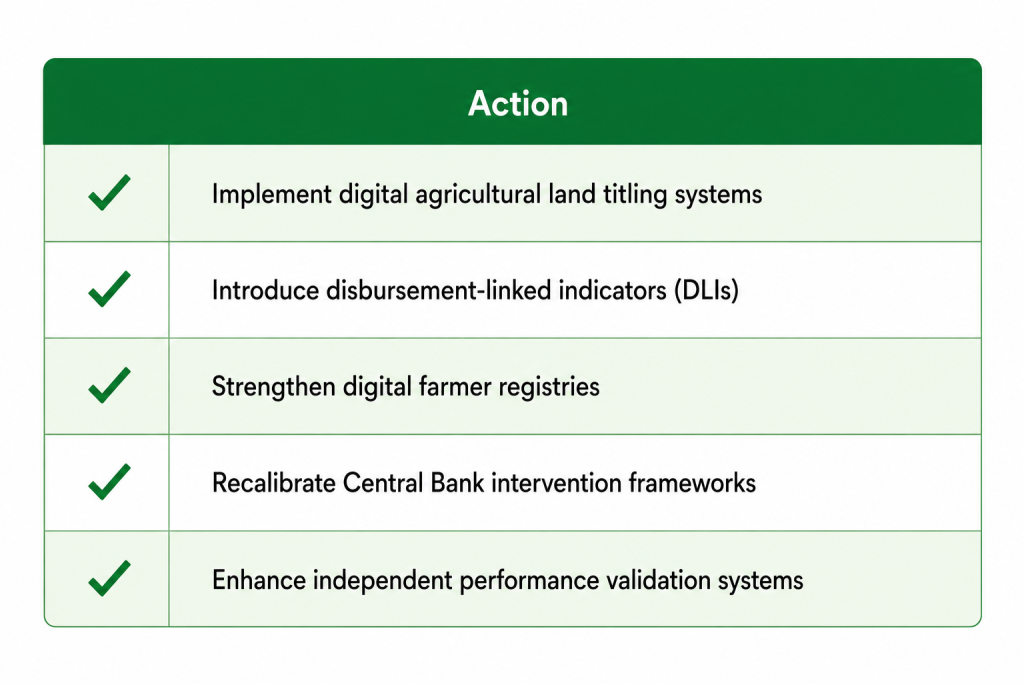
Medium- to Long-Term Actions
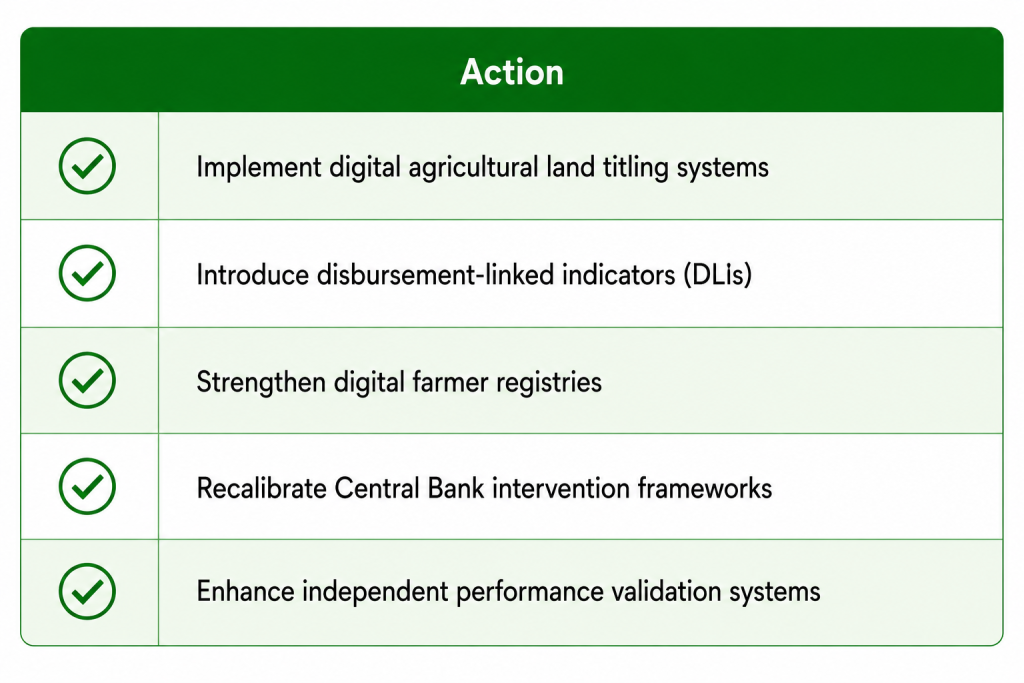
B. Recommendations to the Private Sector
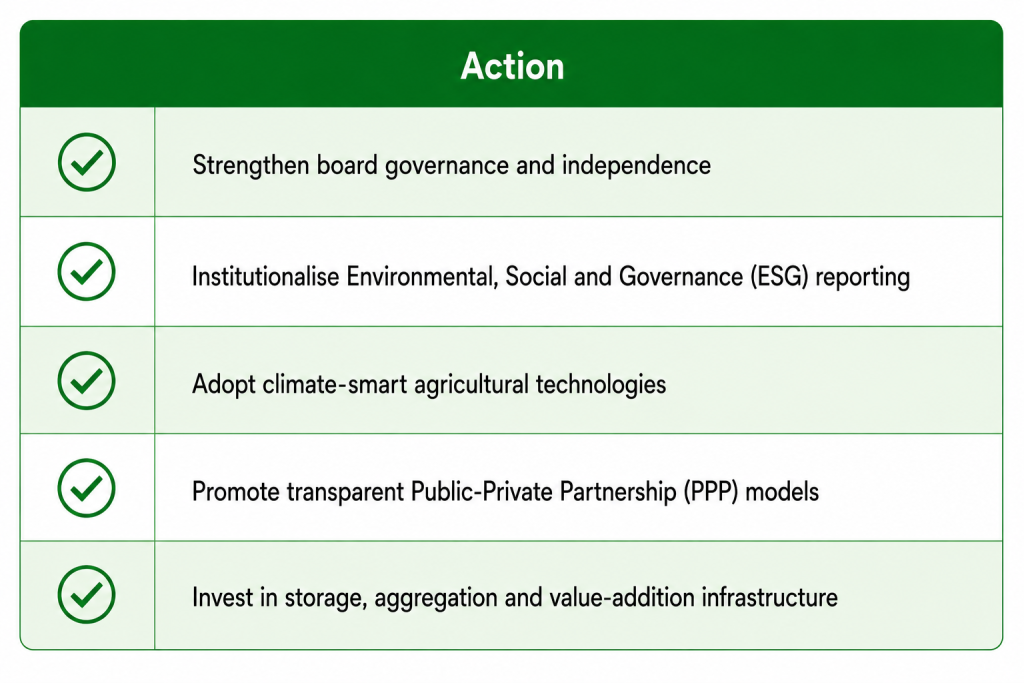
C. Commitments by CIoD Nigeria
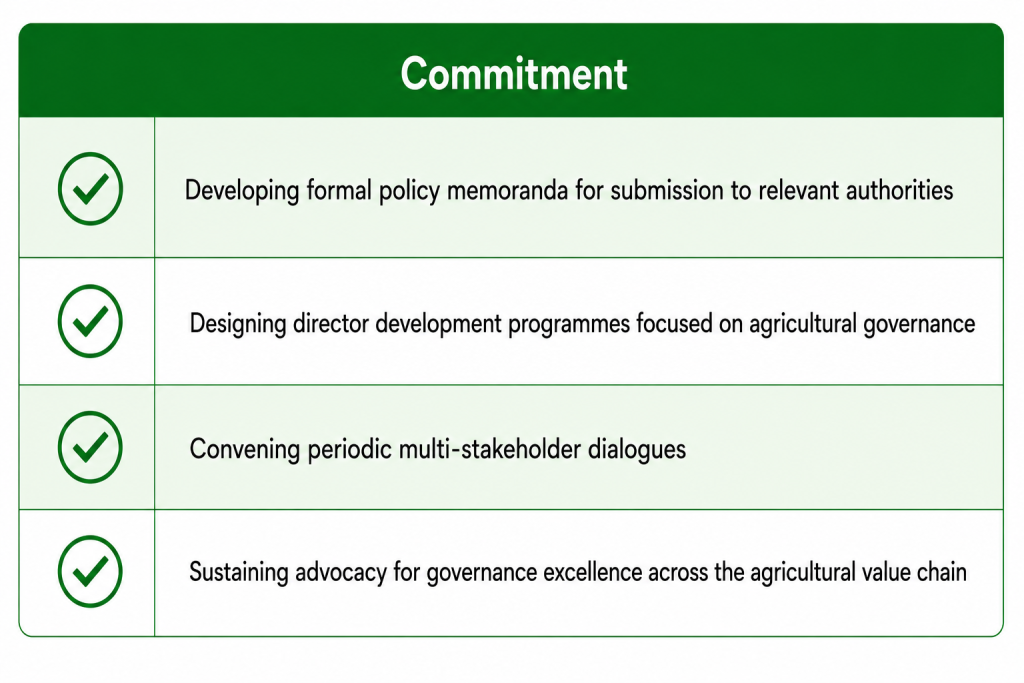
- CONCLUSION
The engagement reaffirmed that Nigeria’s agricultural transformation agenda is fundamentally a governance challenge. Participants agreed that achieving food security, rural prosperity, export competitiveness, and agro-industrialisation will require:
- Policy consistency and long-term institutional stability
- Institutional transparency and accountability
- Structured capital mobilisation and de-risking mechanisms
- Restoration of security and rural stability
- Accountable and forward-looking leadership at all levels
The meeting concluded that governance remains the indispensable bridge between Nigeria’s immense agricultural potential and sustainable economic impact. CIoD Nigeria reiterates its commitment to advancing principled leadership, effective boards, sound governance systems, and evidence-based policy advocacy to reposition Nigeria’s agriculture and agro-allied sector as a globally competitive driver of inclusive and sustainable growth. |
Signed: Agriculture & Agro-Allied Sectoral Group
Dated: March 2026
Location: Lagos, Nigeria