
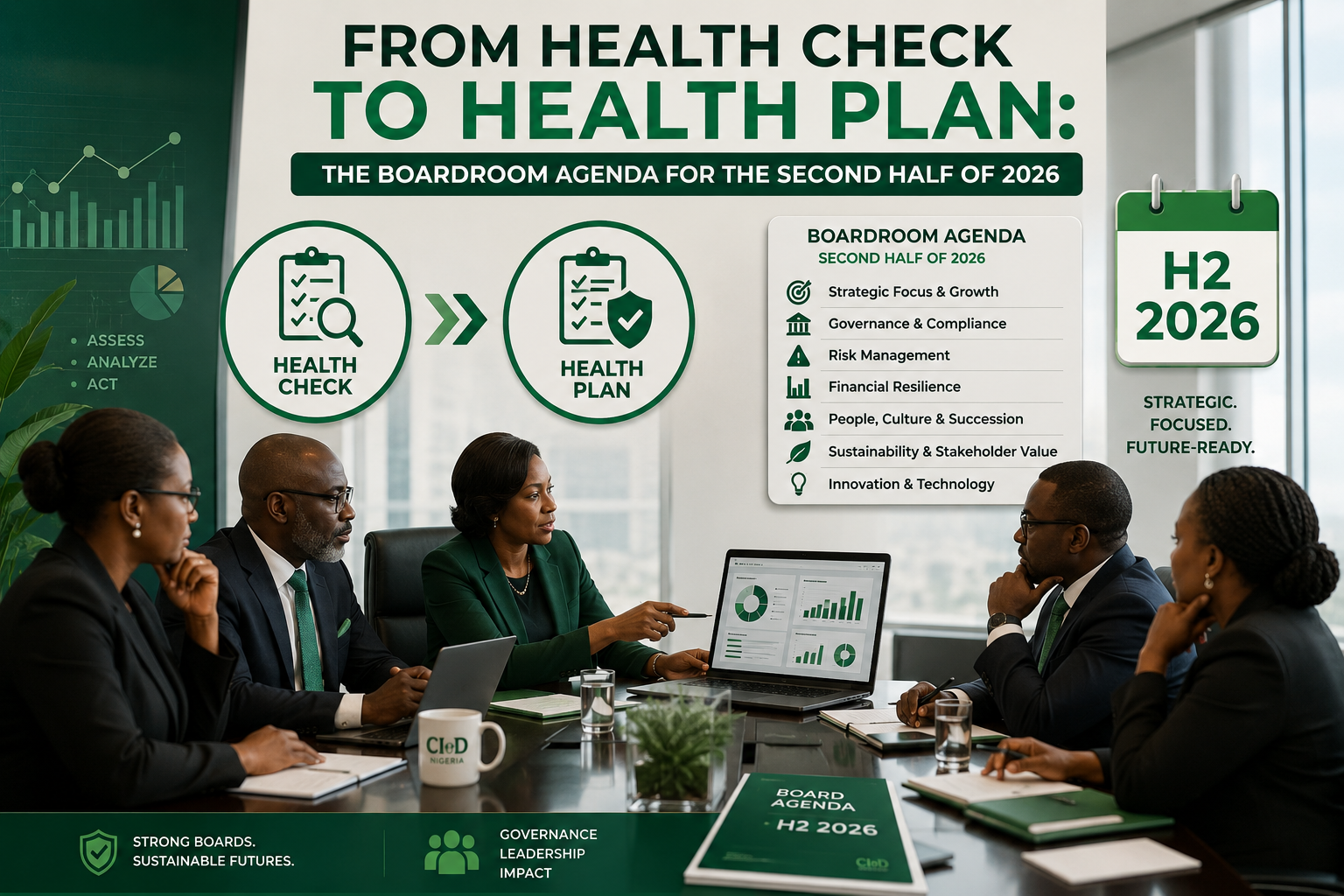
A physician understands that the value of a medical examination lies not in the diagnosis alone, but in the treatment that follows. A health check may reveal elevated blood pressure or an irregular heartbeat, yet little changes unless those findings influence daily habits and clinical decisions. The same principle applies in the boardroom. Governance reviews are designed to uncover weaknesses before they develop into financial distress, regulatory sanctions or reputational damage. Their real worth is measured by the quality of the response.
The first half of 2026 has offered boards a clear picture of where governance attention is required. Advances in technology, changing investor behaviour, rising expectations of board performance and increasing regulatory scrutiny have exposed areas that deserve immediate attention.
The Chartered Institute of Directors Nigeria (CIoD Nigeria), through its Directorate of Advocacy and Stakeholder Engagement, has assembled a Governance Performance Snapshot that goes far beyond reporting governance indicators. It offers a timely assessment of the issues shaping board performance and highlights areas that are attracting increasing attention from investors, regulators, and other stakeholders.
Governance Performance Snapshot
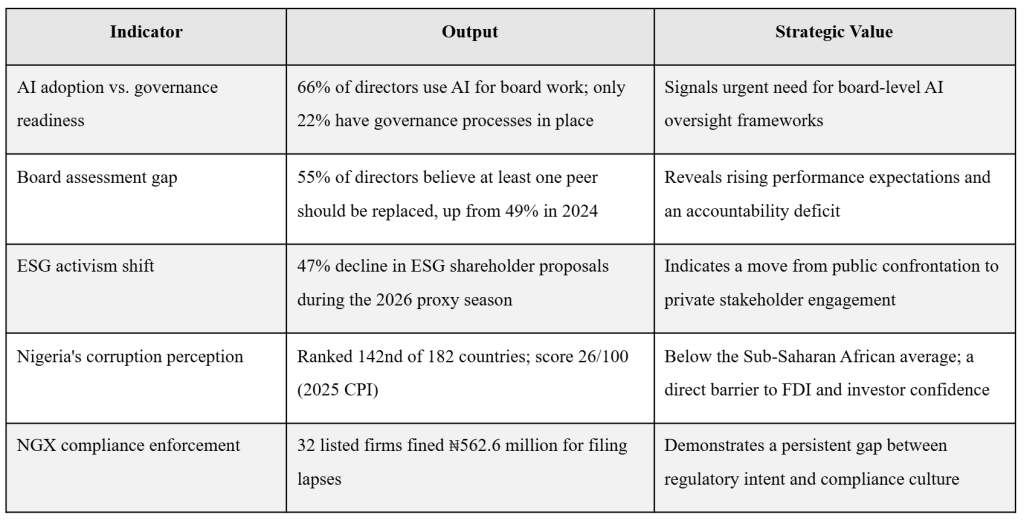
Table 1: Key Governance Risk Indicators, H1 2026
Source: Chartered Institute of Directors Nigeria (CIoD Nigeria), Directorate of Advocacy and Stakeholder Engagement, June 2026 Performance Report.
According to the governance snapshot, 55 per cent of directors believe that at least one fellow board member ought to be replaced, up from 49 per cent two years earlier. Such findings point towards changing expectations rather than personal criticism. Shareholders, regulators and other stakeholders increasingly expect directors to contribute specialised knowledge, independent judgment, and active participation throughout their tenure.
Furthermore, board evaluations have consequently acquired greater value. When approached with honesty and objectivity, they become valuable instruments for strengthening board quality rather than satisfying governance requirements. They reveal gaps in experience, identify future capability needs and support orderly succession planning.
Additionally, the governance snapshot review also revealed that environmental, social and governance matters have entered a different stage of corporate engagement. Based on reports for ESG findings, there is 47 per cent reduction in ESG shareholder proposals, which could easily be interpreted as declining investor interest in sustainability. A closer examination, however, points in a different direction. Institutional investors are increasingly opting for private engagement with boards overpublic confrontation through shareholder resolutions.
The Corruption Perceptions Index provides another reminder that governance quality extends beyond the boundaries of individual organisations. A score of 26 out of 100 and a ranking of 142nd among 182 countries continue to influence international perceptions of the business environment. Foreign investors often examine governance standards alongside economic indicators when assessing investment opportunities.
Although national rankings cannot be altered through the efforts of a single organisation, every board can strengthen confidence within its own institution. Ethical leadership, transparent financial reporting, effective internal controls, protected whistleblowing arrangements and a culture that rewards integrity all contribute to stronger corporate governance.
The governance diagnosis from the first half of the year naturally leads to a practical agenda for the months ahead. Artificial intelligence governance deserves permanent attention within board discussions, supported by clear policies, defined accountability and regular reporting on technology-related risks.
Board evaluations carry greater value when their findings influence succession planning, capability development and board renewal. Ethics and integrity continue to shape organisational reputation through leadership behaviour, transparent reporting and effective control systems.
Geopolitical uncertainty, cyber threats, supply chain disruptions, and economic volatility also warrant closer attention inenterprise risk discussions. Timely board dashboards, supported by reliable data and meaningful analysis, enable informed decisions while improving oversight across the organisation.
Continuous learning remains equally valuable. Guidance from the OECD, the World Bank, the World Economic Forum, the Institute of Directors, and other respected governance institutions reflects a common understanding that board effectiveness depends on directors whose knowledge develops alongside the organisations they serve.
The first half of 2026 has fulfilled the purpose of a governance health check. The findings are now visible, the warning signs are well understood, and the opportunities for improvement are equally clear. Lasting value will come from the decisions that follow rather than the diagnosis itself.
Organisations that convert governance observations into everyday practice are more likely to strengthen investor confidence, improve organisational performance and build enduring trust. Like preventive medicine, effective governance achieves its greatest success when potential problems are addressed long before they become public crises.